
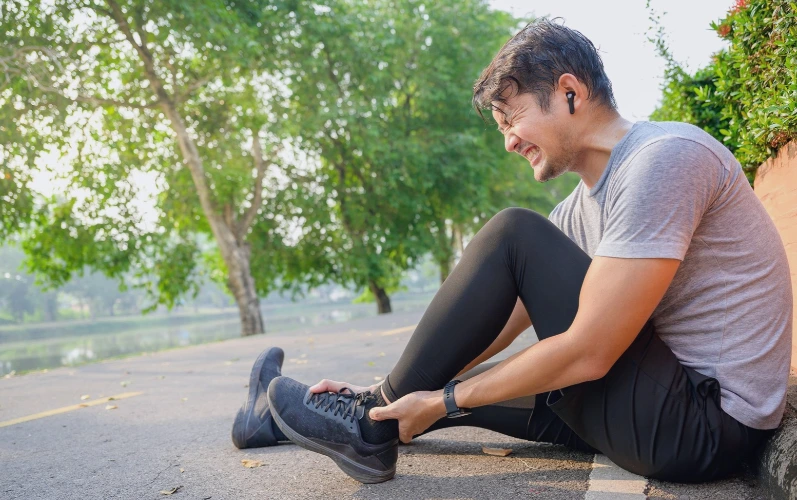
Most common running injuries don’t happen because of one bad step. They often develop for various reasons, especially due to poor movement patterns. Especially when you run too much, too fast, without giving your body enough time to recover, this may lead to muscle strain. You might notice a slight ache in your knee, tightness in your calf, or pain around your heel. These are some early signs. Ignoring them can make things worse.
If you are having Achilles tendinitis or any stress fracture from running or any other condition, spotting running injuries early can help. Look for the right running injury treatment to help you get back to running safely.
During Toronto’s fall race season, runners often increase their mileage to prepare for upcoming races. Running along the waterfront trails, pounding the pavement, or continuing your training through winter can also put extra stress on your body.
Keep reading this blog to learn about injuries or damage during running, their treatments, and prevention.
Key Takeaways
- Increase your running distance gradually. Sudden changes in mileage, speed, or hill training can increase the risk of injuries like runner’s knee, shin splints, and Achilles tendinopathy.
- Choose the right shoes and allow time to recover. Wear comfortable, supportive running shoes, build strength, get enough sleep, and include rest days in your training routine.
- Recognize the early signs of injury. Persistent pain, swelling, limping, or pinpoint bone pain should not be ignored. Stop running and seek medical assessment if you suspect a stress fracture.
- Get the right treatment for a safe return to running. Physiotherapy, strength training, and other treatments can help manage running injuries based on your symptoms and recovery needs.
Why Do Runners Get Injured?
PubMed reports that 48% of Canadian runners in Ontario experience a musculoskeletal injury. According to Longwood’s article, about 50% of running injuries affect the knee, and 80% occur from the knee down. As one of the best ways to stay active, many people develop runner’s knee, shin splints, and IT band syndrome. From poor movement to repeated sprinting, there can be various reasons.
Understanding the common causes can help you lower your risk and catch problems early.
1. Training Load Errors
If you increase your training loads, this can be a common reason for running injuries. Many runners increase their mileage, run faster, or add hill training. They don’t give their bodies enough time to adjust.
It puts extra stress on your knees, shins, calves, and Achilles tendons. Over time, this may lead to problems such as runner’s knee, shin splints, or Achilles tendinitis.
2. Muscle Weakness and Imbalances
Running can feel like just a leg workout, but your entire body is actually at work. Your hips, glutes, calves, and core all work together to keep you stable.
For example, weak hip muscles can affect how your knee moves when you run. Limited calf strength may also make it harder to handle the repeated demands placed on your lower legs. Strength training and squats exercise can really help to build strength and control.
3. Biomechanics and Foot Structure
Not every runner moves in the same way. Some runners have high arches, some may have flatter feet or feet that roll inward more during movement.
However, these features do not automatically mean you will develop an injury. Problems occur when your body struggles to cope with the activity of training.
Custom orthotics may help improve foot support and comfort. A qualified healthcare professional should assess whether they are appropriate for you.
4. Footwear, Running Surfaces, and Toronto Weather
Consider whether your running shoes fit properly and which surfaces you run on. For example, worn-out shoes may offer less cushioning or support than they once did. If you switch suddenly from softer waterfront trails to hard pavement can change the demands placed on your body.
Choose running shoes that fit comfortably and suit your training needs. Replace them when they show significant wear or no longer feel supportive. Introduce such changes gradually.
5. Not Getting Enough Recovery
It’s easy to focus on how many kilometers you run each week and forget about what happens between runs. But your body needs time to recover from training.
Your body needs more rest, especially during training. When you skip the rest days or stay sleep-deprived for a long period, your body will not be able to recover properly. When the muscle does not get enough rest, the pain may get worse. It may also increase the chance of another problem.
Plan rest days, get enough sleep, eat balanced meals, and allow your training load to build gradually. If pain changes your running form, gets worse as you run, or continues to return, don’t try to push through it. Reduce your activity and consider seeing a physiotherapist for an assessment.
8 Most Common Running Injuries
| Injury | Where It Hurts | Typical Cause |
|---|---|---|
| Runner’s Knee | Around or behind the kneecap | Sudden mileage increase, weak hips or quadriceps, and poor kneecap tracking |
| IT Band Syndrome | Outer knee; sometimes outer hip | Overuse, downhill running, and rapid training changes |
| Shin Splints | Inner or front shin | Too much training too soon, hard surfaces, and unsuitable shoes |
| Achilles Tendinopathy | Back of ankle, just above the heel | Repetitive push-off, speed work, hills, and overuse |
| Plantar Fasciitis | Bottom of the heel or arch | Repeated foot-strike load, tight calves, and footwear changes |
| Stress Fracture | Pinpoint pain in shin, foot, hip, or pelvis | Repetitive bone stress without enough recovery |
| Hamstring Strain / High Hamstring Tendinopathy | Back of thigh or sit bone | Sprinting, hills, poor warm-up, and overstriding |
| Ankle Sprain | Outer ankle, sometimes inner ankle | Rolling the ankle on trails, curbs, or uneven ground |
Common running injuries can start with a small ache that you barely notice. Maybe your knee hurts after a long run, your heel feels stiff when you get out of bed, or your shin starts aching halfway through your usual route. Let’s look at eight common running injuries, their symptoms, treatment options, and ways to lower your risk.
1. Runner’s Knee (Patellofemoral Pain Syndrome)
- Runner’s knee is a common painful condition among runners. You may feel fine at the beginning of a run; however, things can worsen.
- What it is: Runner’s knee often develops when the kneecap rubs against the thighbone repeatedly during running, squatting, or climbing stairs.
- Causes: After increases in running distance, speed work, hill training, and weakness in the hip or thigh muscles. Poor movement control can also contribute.
Symptoms:
- A dull ache around or behind the kneecap.
- Pain when running downhill, climbing stairs, or squatting.
- Discomfort after sitting with your knees bent for a long time.
- Pain that increases as your training load builds.
Treatment: Start by reducing the activities that aggravate your knee. You may not need to stop all physical activity, but running through worsening pain is not a good idea. Strength training for quadriceps and hip muscles can help improve knee control. If the pain persists, knee pain treatment may help you understand the cause and plan your recovery.
Prevention: Increase your mileage progressively. Participate in strength training on a regular basis without increasing the pace of the session quickly.
2. IT Band Syndrome
- Does the knee pain return every time you cover a similar distance? Iliotibial (IT) band syndrome may be one possible explanation.
- What it is: The IT band is a strong strip of connective tissue that runs along the outside of your thigh, from the hip toward the knee. IT band syndrome causes pain around the outer knee, often during repetitive running movements.
- Causes: Sudden changes in training, repeated downhill running, and weakness in the hip muscles may contribute. Running on sloped or uneven surfaces can also aggravate symptoms.
Symptoms:
- Aching or sharp pain on the outside of the knee.
- Pain that develops during a run and worsens as you continue.
- Tenderness around the outer knee.
- Discomfort that may extend toward the outer hip.
- Treatment: Reduce the running activities that trigger pain and temporarily avoid steep downhill routes. A physiotherapist can assess your hip strength, running mechanics, and training routine. Targeted strengthening and a gradual return to running may help. If the pain involves both your knee and hip, an assessment for knee and hip pain can help identify contributing factors.
- Prevention: Strengthen your glutes and hip muscles, vary your running routes, and increase downhill mileage gradually.
3. Shin Splints (Medial Tibial Stress Syndrome)
- For new runners, this injury is particularly frustrating – you find your groove, start running further, and then feel pain in the lower parts of your shins.
- What it is: Shin splints involve pain in the front part of your lower legs. The condition is related to the overloading of the lower limb muscles and develops due to increased physical activity.
- Causes: The most common causes of shin splints are a rapid increase in mileage, running on hard surfaces, a change of shoes, and lack of recovery time. Beginners are also at risk as their bodies do not get accustomed to running yet.
Symptoms:
- Pain in a large part of the inside of your shin;
- Pain during or after running;
- Pain coming back during your workouts;
- Tenderness increasing when repeatedly hitting the floor.
Treatment: Cut down on running and other impacts until the symptoms are gone. Take a look at your shoes and training and slowly return to running. Physiotherapy can help you develop lower leg muscles and fix your training problems.
One thing to remember: symptoms of shin splints are sometimes confused with stress fractures. If the pain becomes concentrated in one place, persists even while walking, and does not go away, it may be a stress fracture.
Shin splints are especially frustrating for new runners. You finally settle into a routine, increase your distance, and then notice pain along the inside of your lower legs.
4. Achilles Tendinopathy
- The Achilles tendon is the tendon that links the calf muscles to your heel. This tendon functions under pressure every time you exert force on the ground. If your tendon has difficulty dealing with the demands of your training program, then stiffness and pain can occur.
- What it is: Achilles tendinopathy refers to the presence of pain and alterations in your Achilles tendon, resulting from repetitive strain that your tendon finds difficult to cope with.
- Causes: These include abrupt increases in speed, hill training, high volumes of training, inadequate rest, and a quick change in your running regimen.
Symptoms:
- Stiffness around the back of the heel or lower calf.
- Pain when you first get out of bed.
- Discomfort during the first few minutes of running.
- Tenderness or swelling around the tendon.
- Pain during push-off or uphill running.
- Treatment: Restrict your activities that cause strain on the tendon without necessarily stopping physical activity. Guided strengthening training can also boost the calf muscles’ power. Consulting with a physiotherapist can help you regulate the load during your exercises.
If symptoms persist despite appropriate rehabilitation, shockwave therapy may be considered as one treatment option. An assessment for foot and ankle pain can help determine whether it is suitable for your condition.
Prevention: Build calf strength over time, increase hill and speed work gradually, and pay attention to morning stiffness that keeps returning.
5. Plantar Fasciitis
- The intense heel pain you experience when you first step in the morning may be an indication of plantar fasciitis. Such pain comes back. again and again during walking, jogging, or leg movement.
- What it is: Plantar fasciitis in runners refers to an inflammation in the plantar fascia – a ligament-like band of connective tissue that extends from the heel bone toward the forefoot.
- Causes: It may result from repetitive strain while running, a rapid increase in training load, tightness of the calf muscle, or wearing new shoes. Also, foot structure may influence how the plantar fascia copes with continuous load.
Symptoms:
- Intense pain under the heel, especially in the inner part of the heel.
- Pain while stepping on the ground first thing in the morning.
- Pain after prolonged sitting.
- Pain in the heel after prolonged running or walking.
Treatment: Treatment may include adjusting your running load, calf stretching, strengthening exercises, and wearing comfortable, supportive shoes. Some runners may benefit from an assessment for custom orthotics, but orthotics are not necessary for everyone. A foot care guide can also help you understand your footwear and foot-support options.
Prevention: Increase training gradually, maintain calf strength and flexibility, and avoid sudden changes to minimalist shoes or barefoot running.
6. Stress Fractures
- A stress fracture is not a typical case of post-run pain; rather, it tends to become more localized and can increase its intensity each time you run. It is crucial to pay attention to it, because otherwise, it will result in a more severe bone injury.
- What it is: A stress fracture is a tiny break in a bone resulting from excessive loading, due to which a bone cannot recover properly. For runners, stress fractures can affect the shin bone or foot bones.
Causes:
Some common causes of a stress fracture include:
- You increase the mileage suddenly, which strains a specific spot
- Muscle strain while running or during other weight-bearing activities.
Treatment Management: If you think you have a stress fracture, you should cease running and have yourself medically evaluated. One should never attempt to push through localized bone pain when running. A medical professional might order imaging studies. The early X-ray might come back negative, and therefore, further imaging might be required.
A physiatry assessment may help guide rehabilitation and a safe return to activity. Some stress fractures require urgent specialist care, particularly those in higher-risk locations.
Prevention: Increase your mileage gradually, allow enough recovery time, and eat enough to support your training. Persistent, pinpoint bone pain should never be treated as ordinary muscle soreness.
7. Hamstring Strains and High Hamstring Tendinopathy
Your hamstrings help you accelerate, slow down, and control your stride. That’s why these muscles and their tendons can come under extra stress during sprint sessions, hill repeats, and faster race training.
- What it is: A hamstring strain occurs when muscle fibers are overstretched or torn. High hamstring tendinopathy affects the tendon where the hamstrings attach near the sit bone at the bottom of the pelvis.
- Causes: Sudden sprinting, intense hill work, fatigue, and rapid increases in running intensity can contribute. Previous hamstring injuries may also increase the risk of another injury.
Symptoms:
- Sudden pain or tightness at the back of the thigh with a strain.
- Tenderness, bruising, or weakness in more significant strains.
- Deep pain near the sit bone with high hamstring tendinopathy.
- Discomfort during speed work, uphill running, or prolonged sitting.
Treatment: This depends upon whether the issue is muscular or tendinous. A minor strain can be treated by modifying your activity and gradually building strength. In the case of high hamstring tendinopathy, a graded loading program will usually be required. You should not go back to sprinting until you can do this without pain.
If the pain is close to your sit bone or overlaps with other symptoms, an assessment for hip pain may help clarify the source.
Prevention: Prior to faster-paced training, warm up, do hamstring exercises, and gradually build up speed and hill training. Also allow your legs to recuperate after tough training sessions.
8. Ankle Sprains
Toronto runners often move between waterfront paths, sidewalks, park trails, and uneven ground. One unexpected dip in the path or awkward landing can cause your ankle to roll.
- What it is: An ankle sprain happens when the ligaments supporting the ankle stretch or tear. It often occurs when the foot rolls inward, placing too much stress on the ligaments on the outside of the ankle.
- Causes: Uneven trails, curbs, slippery surfaces, fatigue, and reduced ankle stability can contribute. Winter ice and snow can make footing less predictable.
Symptoms:
- Sudden ankle pain after twisting or rolling the foot.
- Swelling and bruising.
- Tenderness around the ankle.
- Difficulty walking or putting weight on the affected foot.
Treatment: Protect the ankle and reduce activities that worsen pain. Gradual movement, strengthening, and balance exercises can help restore function. Seek medical attention if you cannot bear weight, have significant swelling or tenderness over a bone, or suspect a fracture. Severe sprains may require additional treatment.
If your ankle repeatedly gives way, a healthcare professional may recommend rehabilitation or a suitable custom ankle brace to improve stability during recovery.
Prevention: Strengthen your ankle muscles, practice balance exercises, and wear appropriate footwear for your route.
Treatment Options for Running Injuries
- Get some Rest, Home Care, and Manage Activity
It is not necessary to completely refrain from physical exercise in case of an injury. Simply decrease the mileage, pace, or incline that causes pain, and allow your body to recover.
- Physiotherapy and Gradual Strength Training
Physiotherapy allows you to gain strength, enhance your motor skills, and run again without harm. A physiotherapist will devise a program according to your injury and fitness level.
- Shockwave and Laser Treatment for Chronic Tendinopathy
Consider Shockwave therapy and laser treatment for chronic cases of tendinopathy. However, you should consult a physician first to know whether the procedure is right for your injury.
- Massage and Chiropractic Treatment
Massage therapy could relieve tightness of muscles caused by tough running sessions. Chiropractic therapy may assist you in solving muscle and joint problems selectively.
- Orthotics and Bracing
It is possible that custom orthotics may help with support and comfort for some runners. The use of bracing may help support an injured joint or ankle.
- Physiatry for Persistent Pain
A physiatrist can assess ongoing pain and recommend treatments such as rehabilitation or injections when appropriate. The goal is to improve function and help you return to daily activities. Before you start debating physiotherapy vs. pain medication, just know that a multidisciplinary approach delivers the best result. Physiotherapy focuses on improving strength and movement, while pain medication may offer short-term relief. Taking a multidisciplinary approach can really be helpful.
When Should You See a Professional?
A little muscle soreness after a run can be normal, especially when you increase your training. But pain that keeps returning, gets worse, or affects how you move shouldn’t be ignored.
Consider seeing a healthcare professional if you notice any of these warning signs:
- Pain that changes your stride: You start limping or changing how you run to avoid pain.
- Pain at rest or at night: Your pain continues even when you’re not running.
- Swelling: Your knee, ankle, or another area becomes swollen.
- Pinpoint bone tenderness: One specific spot on your shin, foot, or another bone hurts when touched. This may need assessment for a stress fracture.
- Numbness and tingling: Persistent pain (lasting longer than 2 weeks).
If you have any suspicion of a stress fracture or if you are unable to put weight through your foot after an injury, stop running and seek immediate medical attention. If symptoms are severe or getting worse quickly, you should seek urgent treatment.
Can You See a Physiotherapist in Ontario Without a Referral?
Yes. Physiotherapy can generally be accessed directly in Ontario without you needing to see a doctor first. Some insurance companies will ask for a referral from a doctor.
Make sure you check what your insurance covers, including how much it will cover per year, whether they need a referral, and whether they can bill directly.
Running Injury Care at F.R.O.M. Toronto Pain Relief Clinic
Running pain shouldn’t keep you away from the trails for longer than necessary. At F.R.O.M. Toronto Pain Relief Clinic, you can access physiotherapy, chiropractic care, registered massage therapy (RMT), custom orthotics, shockwave therapy, and physiatry under one roof. We will create a customized care plan that depends on your injury, symptoms, and recovery goals.
With direct billing available for eligible insurance plans and same-day appointments where available.
Visit either of our two clinics: Downtown Toronto (179 Queen St E) or North York (15 Glenforest Rd)
Don’t let ongoing pain hold back your running routine. Book a free consultation for running injury physiotherapy in Toronto.
