
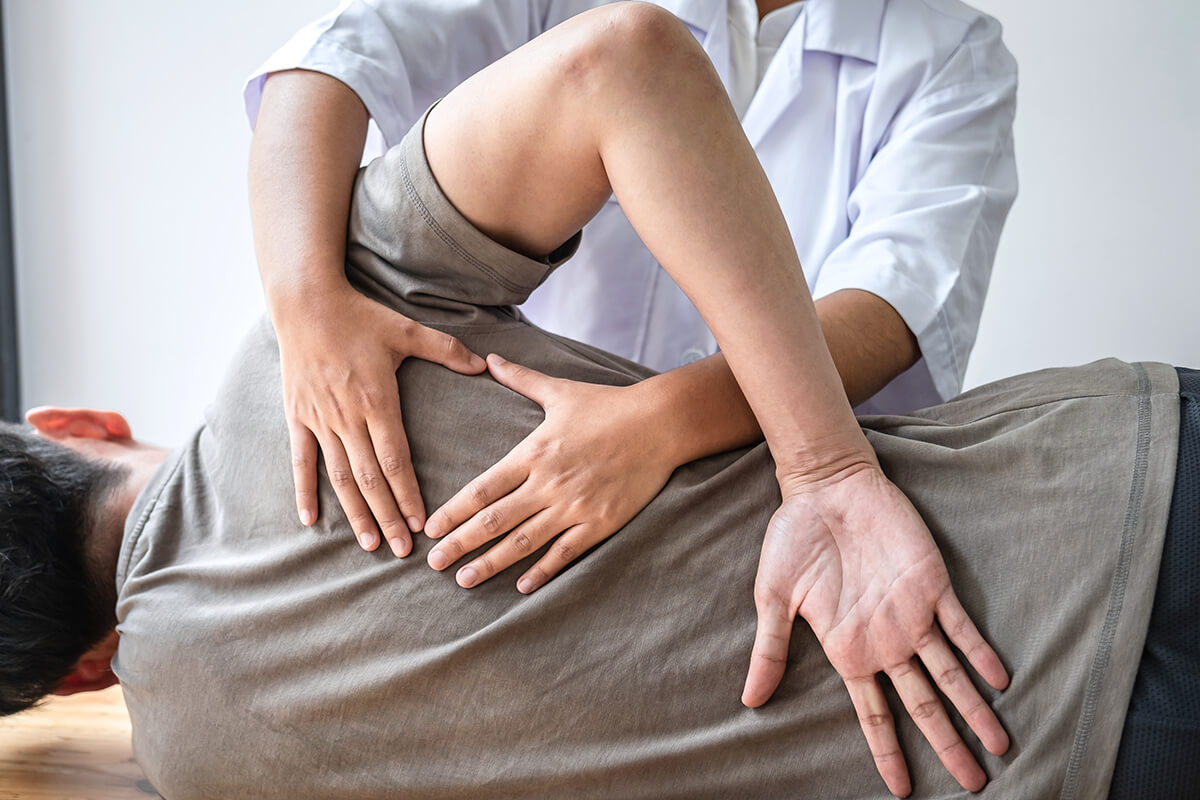
Chronic stiffness is one of those conditions people tend to live with longer than they should. It does not always announce itself as dramatically as acute pain, so it gets managed rather than treated. People stretch more, move less, and gradually accept a reduced range of motion as their new normal. What most patients do not realize is that chronic stiffness has specific underlying causes, and both physiotherapy and massage therapy address those causes in distinct and complementary ways. Understanding what each discipline actually does, and why the two work better together than either does alone, is a genuinely useful starting point for anyone dealing with persistent tightness that will not go away.
Key Takeaways
- Chronic stiffness is driven by a combination of muscular tightness, restricted joint mechanics, and movement dysfunction that requires different types of treatment to fully resolve.
- Physiotherapy addresses the biomechanical root cause of stiffness through movement assessment, corrective exercise, and manual therapy.
- Massage therapy reduces muscular tension, improves circulation, and calms the nervous system to make movement less restricted and painful.
- Using both in a coordinated plan, as offered at F.R.O.M. Toronto Pain Relief Clinic, consistently produces better outcomes than either treatment used alone.
- As Ali D. Kanji, PT/DPT has noted: a physiotherapist diagnoses the biomechanical issue and strengthens the weak muscles, while a massage therapist handles the pain and aches that are hard to manage on their own. Both matter.
What is chronic stiffness and why does it not resolve on its own?
Chronic stiffness is persistent tightness or restricted movement in one or more areas of the body that lasts beyond the normal tissue healing window, typically considered to be around three months. It is not the same as the temporary stiffness felt after exercise or a poor night’s sleep. Chronic stiffness involves structural and neurological changes in the soft tissue and joint systems that do not self-correct through rest or stretching alone.
Several mechanisms drive it. Muscles that are chronically underloaded or held in shortened positions develop altered tone over time. Joints that are not moving through their full range gradually lose the mobility they are not using. The nervous system adapts to restricted movement patterns and treats them as normal, making it harder for patients to simply will themselves into moving better. Without treatment that addresses these underlying mechanisms specifically, chronic stiffness tends to progress rather than resolve. That is the core reason people who stretch daily for months still find themselves tight in the same places.
What does physiotherapy specifically do for chronic stiffness?
Physiotherapy addresses the mechanical and structural causes of chronic stiffness. A registered physiotherapist begins with a clinical assessment that identifies which joints are restricted, which muscles are weak or overactive, and what movement patterns are contributing to the stiffness. This diagnostic step is what separates physiotherapy from general stretching or exercise, because treatment is targeted at what the assessment actually reveals rather than applied generically.
From there, treatment typically involves a combination of:
- Corrective therapeutic exercise to strengthen muscles that are underloaded and contributing to compensatory tightness elsewhere
- Manual therapy to restore joint mobility and address soft tissue restrictions directly
- Neuromuscular retraining to help the body adopt improved movement patterns that reduce the load driving stiffness
- Modalities such as laser therapy to reduce inflammation in chronically restricted areas
The goal of physiotherapy for chronic stiffness is functional improvement, meaning the patient moves better, with less restriction, and maintains that improvement because the underlying cause has been addressed rather than temporarily relieved.
What does massage therapy specifically do for chronic stiffness?
Massage therapy works on the soft tissue and nervous system dimensions of chronic stiffness. Registered massage therapists use skilled manual techniques to reduce muscular tension directly, improve local circulation, and influence the nervous system’s contribution to tightness and pain.
Chronically stiff muscles are often accompanied by trigger points, areas of localized hypertonicity within the muscle tissue that refer pain and restrict movement. Massage therapy targets these directly in a way that exercise and joint mobilization cannot. Improved circulation through massage supports tissue health and recovery in areas that have been chronically restricted and underserved by blood flow. The calming effect of massage on the nervous system also reduces the protective muscle guarding that often accompanies chronic stiffness, making movement easier in the hours and days that follow treatment.
What massage therapy does not do is correct the underlying biomechanical causes of stiffness. It does not strengthen weak muscles or retrain movement patterns. This is why its effects, while real and meaningful, are often temporary when used in isolation over the long term.
Where the two approaches differ from each other
Understanding the distinction between what each discipline does is the clearest way to understand why both are often needed.
| Physiotherapy | Massage Therapy | |
| Primary focus | Movement, strength, joint mechanics | Soft tissue tension, circulation, nervous system |
| Assessment included | Yes, full clinical evaluation | Initial intake for context |
| Addresses root cause | Yes | Partially |
| Provides symptom relief | Yes, over time | Yes, more immediately |
| Corrects movement patterns | Yes | No |
| Reduces muscular tension directly | Through exercise and manual therapy | Directly through manual technique |
Neither discipline is superior to the other. They operate on different parts of the same problem. A patient who only receives massage therapy may feel better after each session but find the stiffness returns because the biomechanical issue driving it has not been resolved. A patient who only receives physiotherapy may progress more slowly than necessary because the muscular tension making movement painful and difficult is not being addressed directly alongside the structural work.
Where the two approaches work better together
The reason physiotherapy and massage therapy are most effective in combination comes down to how they reinforce each other’s outcomes. Massage therapy reduces the muscular tension and pain that make physiotherapy exercises harder to perform correctly and consistently. Physiotherapy builds the strength and movement quality that prevents the tension from returning after massage. Each makes the other more effective.
This is the principle behind what Ali D. Kanji, PT/DPT has described as the optimal approach for patients dealing with chronic stiffness: a physiotherapist diagnoses the actual biomechanical issue and strengthens the weak muscles, while a massage therapist handles the muscle pain and aches that are hard to manage independently. Being stronger allows for more flexibility, and having less muscular tension allows strength work to progress more efficiently. The two disciplines create a clinical loop that addresses stiffness from both directions simultaneously.
What a combined treatment plan looks like at F.R.O.M. Toronto Pain Relief Clinic
At F.R.O.M. Toronto Pain Relief Clinic, physiotherapy and massage therapy are delivered under the same roof at both the North York and downtown Toronto locations, which means the two practitioners involved in a patient’s care can communicate directly rather than working in isolation from each other.
A combined plan for chronic stiffness at F.R.O.M. typically involves:
- An initial physiotherapy assessment to identify the mechanical drivers of stiffness and establish the treatment framework
- Massage therapy sessions timed to reduce tension and prepare the body for the progressive exercise work in physiotherapy
- Coordinated progress reviews so that both components of the plan adapt as the patient improves
- Additional modalities where appropriate, including shockwave therapy or laser therapy to support tissue recovery in persistently restricted areas
No referral is needed to access either service. Patients with extended health benefits, WSIB coverage, or MVA insurance can access both disciplines with billing handled directly through the F.R.O.M. insurance process.
Which patients benefit most from this combined approach?
The combination of physiotherapy and massage therapy for chronic stiffness is particularly well suited for:
- Office workers and desk-based professionals dealing with persistent neck, upper back, or shoulder tightness from prolonged sitting
- Seniors experiencing reduced mobility and stiffness that is limiting daily activity and independence
- Athletes managing chronic tightness in the hips, hamstrings, or thoracic spine that affects performance and recovery
- Patients recovering from injury whose stiffness has persisted beyond the expected tissue healing window
- Anyone who has been stretching consistently without meaningful improvement in their range of motion
If stiffness has been present for more than a few weeks and is affecting how you move, sleep, or participate in daily activities, it is worth getting a clinical assessment that identifies what is actually driving it rather than continuing to manage it around the edges.
Conclusion
Chronic stiffness responds best when it is treated at both the mechanical and soft tissue level simultaneously. Physiotherapy and massage therapy each address a different dimension of the same problem, and the evidence for using them together is reflected in consistently better patient outcomes than either approach produces alone.
