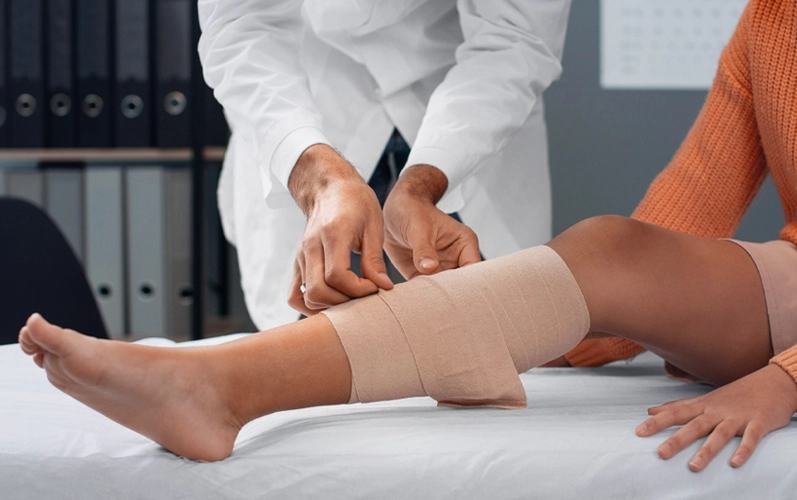
Compression stockings are elastic stockings. It is an advanced version of a crepe bandage. It improves blood flow by applying gentle pressure on the feet and ankle. Heal any foot discomfort from arteriosclerosis, varicose veins, or deep vein thrombosis (DVT).
Many people also use compression socks after surgery. Many clinicians recommend it for pregnant women.
A PubMed report says that 7 per 1000 people have ankle and foot sprains per year. So, when can you have a sprain?
Foot swelling from arteriosclerosis or varicose veins, or feet twisting during activities, have several reasons. If you run on an uneven surface or sit or stand for long hours, there is a risk of strain.
Key Takeaway
- Compression stockings increase blood circulation by applying gentle pressure to the legs and ankles.
- They help reduce swelling, leg fatigue, stiffness, and the risk of blood clots.
- Different compression levels are available based on medical needs and daily activities.
- Compression stockings are popularly worn during pregnancy, after surgeries, and even to treat varicose veins or circulation issues.
- Compression socks are also recommended for athletes, office workers, frequent travelers, or individuals who have to stand for extended periods of time.
- Getting the correct size and compression is key when selecting compression stockings.
- Wearing them regularly may promote leg health.
What are Compression Stockings?
If you don’t know what compression stockings are. The answer is that they are exactly medical-grade elastic garments. You can wear it below-knee, high-thigh, and waist-length.
It applies controlled pressure to the legs, strongest around the ankles, and gradually decreases upward. It pushes blood and excess fluid and improves blood circulation.
Compression stockings increase blood flow in the veins. Reduce the risk of blood stagnation and risk of blood clots or increased swelling and pain, Compression stockings also benefit the calf muscles. Reduce swollen feet, leg fatigue, and lower the chances of clot formation. Especially in people who sit or stand for long hour. It is also an ideal pain relief solution for people recovering after surgery or having circulation-related conditions.
Types of Compression Stockings and Their Usage
Here is a chart of Custom Stocking Size, Uses [Reviewed by Toronto Pain Relief Clinic Specialist]
| Type of Compression Stockings | Compression Level (mmHg) | Common Uses / Conditions |
| Mild Compression Stockings | 8–15 mmHg | Tired legs, mild swelling, long hours of standing or sitting, travel-related discomfort |
| Moderate Compression Stockings | 15–20 mmHg | Mild varicose veins, pregnancy-related swelling, early circulation problems |
| Firm Compression Stockings | 20–30 mmHg | Moderate varicose veins, leg pain, post-surgery recovery, prevention of blood clots (DVT) |
| High Compression Stockings | 30–40 mmHg or higher | Severe venous insufficiency, chronic edema, severe varicose veins, lymphedema |
| Anti-Embolism Stockings | Usually 8–18 mmHg | Used after surgery, during prolonged bed rest, hospitalization, or pregnancy to reduce the risk of blood clots |
When Should you Look for Compression Stockings?
No need for a prescription for the use of custom stockings. You can get compression socks even if you feel like them. Although doctors often prescribe its usage for:
- Swollen legs or numbness from arteriosclerosis
- Office workers who sit or stand for longer hours
- People with varicose veins, deep vein thrombosis, or diabetes
- Pregnant women with swollen feet or leg discomfort
- Athletes or sports personnel mostly play with their legs
- People with a foot or ankle sprain from injury
- Athletes need muscle recovery support
- Frequent travelers on long flights or road trips
Compression Stockings Benefits
Improve Blood Circulation
Compression stockings benefit by improving blood circulation in the feet or legs. It gently squeezes your legs in a way that helps blood move upward toward the heart instead of pooling in the lower legs. Scientifically, this improves venous return. It supports healthier circulation. Your legs will feel lighter or less tired.
Reduce the Chance of Blood Clots
When blood stays still in the legs for too long, it increases the risk of clot formation. Often this condition is called deep vein thrombosis (DVT). Compression socks keep the blood flowing properly and reduce venous stasis. This is why doctors often recommend them after surgery or during long travel. It supports healing.
Reduce Discomfort from Varicose Veins
Twisted or enlarged varicose veins struggle to push blood back up efficiently. This is a common condition for which a clinician may recommend compression stockings. It supports the vein walls and improves blood flow. Reduce the risk of swelling, aching, and that heavy-leg feeling. They basically help your veins work with less stress.
Vascular Insufficiency Symptoms in the Feet
Compression socks benefit another common condition named vascular insufficiency. Veins become open after years of pressure, or arteries become closed with arteriosclerosis. It disrupts the blood circulation. Show symptoms like numbness or coldness in the feet.
Give Relief from Stiffness and Pain
For people who have stiff legs as a result of prolonged standing or sitting, there are special stockings that can help improve oxygen flow to the muscles. It is one of a reliable ways to get rid of pain without surgeries. Help reduce fluid accumulation in your muscles. It is easy for you to get rid of muscle stiffness and tiredness.
Support Recovery After Surgery
After surgery, people usually move less due to restrictions. As a result, it reduces blood circulation, and the chances of swelling are high. These conditions can be alleviated through the use of compression stockings. They will improve the flow of blood and decrease the retention of fluids in the body.
Reduce Leg Discomfort During Pregnancy
Pregnancy puts extra pressure on the veins due to increased weight or blood volume. Women often get symptoms like foot swelling, strain, or foot cramps. Compressive socks prevent educe fluid pooling. Give relief to any foot discomfort during pregnancy.
Improve The Performance of Sports Personnel
Compression stockings also help gym goers, runners, or athletes engaged in active play. Since it reduces stiffness in the foot muscle, people perform better.
However, There Are a Few Things You Should Be Careful About
| Things to Remember While Using Compression Stockings | Why It Matters |
| Choose the correct compression level | Too much pressure may feel uncomfortable, while too little may not give proper support |
| Wear the right size | A poor fit can reduce effectiveness and may increase discomfort or skin irritation |
| Put them on in the morning | Swelling is usually lower in the morning, making stockings easier to wear and more effective |
| Keep the stockings wrinkle-free | Folded or wrinkled fabric can create uneven pressure on the skin |
| Remove them before sleeping (unless advised otherwise) | Most people only need compression during the daytime circulation cycle |
| Wash them regularly | Clean stockings maintain elasticity, hygiene, and skin comfort |
| Replace worn-out stockings | Old stockings lose compression strength and stop providing proper support |
| Watch for numbness or skin discoloration | Tingling, pain, or color changes may mean the stockings are too tight |
| Avoid rolling the top down | Rolled stockings can block circulation instead of improving it |
| Consult a clinician if you have diabetes or arterial disease | Some circulation conditions require special guidance before using compression wear |
Conclusion
Compression stockings are a simple yet effective support solution for improving blood circulation. From reducing swelling and preventing discomfort in the legs and feet, it has multiple benefits.
It is crucial, though, that you select the most suitable compression and size. If you have any circulatory conditions or experience pain, it is best to consult a doctor before using such garments. Whether it is post-surgery recovery, struggling with varicose veins, or experiencing swelling during your pregnancy, we can help you. Have faith in our pain relief clinic in Toronto. We have helped 50+ patients to get back to a normal life, struggling with chronic or acute pain. Our custom orthotic team is here to guide. We will help you through the assessment so that we can give you an accurate solution.
